
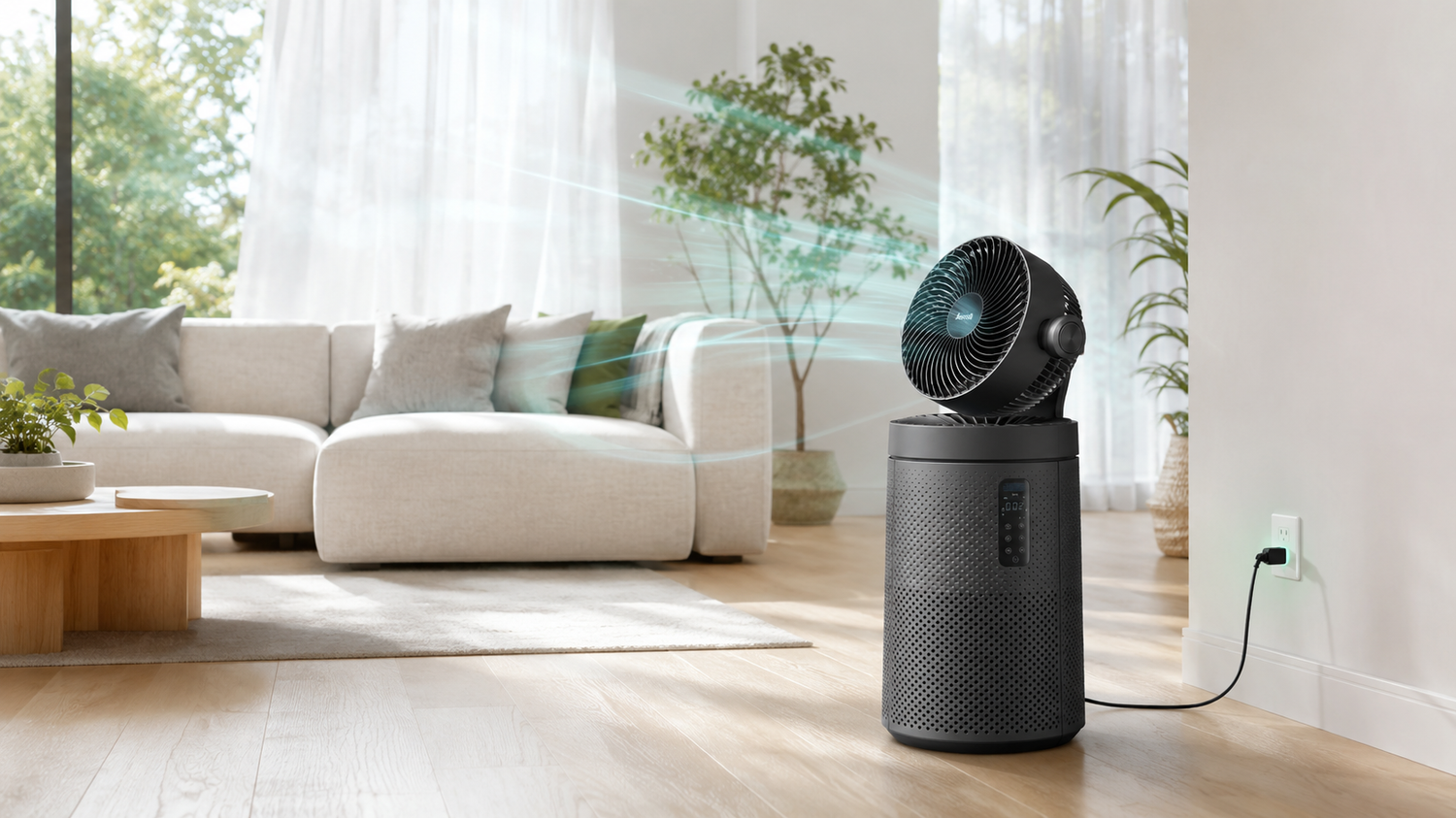
If you're thinking about buying an air purifier, you may have wondered: Does an air purifier use a lot of electricity?
It's a fair question. An air purifier is different from many household appliances because you may want to leave it running for several hours a day—or even overnight. So, while the electricity used by a single hour of operation may seem small, you might still wonder how much it adds up over time.
The good news is that most household air purifiers don't use a lot of electricity. Compared with appliances that heat or cool your home, an air purifier generally requires much less power.
The actual energy consumption depends on the model, fan speed, room size, and how long you use it each day. Understanding these factors can help you choose the right air purifier and keep your running costs under control.
How Much Electricity Does an Air Purifier Use?
The easiest way to estimate an air purifier's electricity consumption is to look at its wattage.
Many household air purifiers operate somewhere between around 30 and 100 watts, although the exact power consumption varies from one model to another. Smaller air purifiers designed for bedrooms or personal spaces may use less, while larger models designed for bigger rooms can use more.
The fan speed also makes a difference.
An air purifier running at its highest fan speed generally consumes more electricity than the same purifier operating in Sleep Mode or at a lower speed.
For example, imagine you have a 50-watt air purifier.
If you run it for 8 hours:
50 watts ÷ 1,000 × 8 hours = 0.4 kWh
Running the same purifier for 30 days at 8 hours per day would use approximately:
0.4 kWh × 30 = 12 kWh per month
To estimate the actual cost, multiply the monthly electricity consumption by your local electricity rate.
If your electricity rate is $0.17 per kWh:
12 kWh × $0.17 = $2.04 per month
This is only an example. Your actual air purifier running cost will depend on the power consumption of your particular model and the electricity rate where you live.
Does Running an Air Purifier 24/7 Use a Lot of Electricity?
You can run an air purifier 24/7, and many people choose to do so.
Air quality can change throughout the day. Dust can be stirred up when people walk around, cooking can introduce particles into the air, and outdoor air can enter through doors and windows. Keeping an air purifier running continuously allows it to keep circulating and filtering the air instead of starting from scratch every time you turn it on.
However, running an air purifier continuously does use more electricity than running it for only a few hours.
Let's use the same 50-watt example.
A 50-watt air purifier running 24 hours a day would consume:
50 ÷ 1,000 × 24 = 1.2 kWh per day
Over 30 days:
1.2 × 30 = 36 kWh per month
At an electricity rate of $0.17 per kWh, that would be approximately $6.12 per month.
Again, this is simply an example to show how the calculation works.
Your actual cost could be lower if your purifier uses less power or operates at lower fan speeds for much of the day.
This is why the question isn't simply whether an air purifier runs all day. It's also about how much power it uses while running.

What Determines Air Purifier Electricity Consumption?
Several factors affect how much electricity an air purifier uses.
1. Fan Speed
The fan is one of the main components that determines an air purifier's power consumption.
Higher fan speeds move more air through the filtration system, but they generally require more electricity.
If you're dealing with noticeable smoke, dust, or other airborne particles, you may choose a higher fan speed for a period of time. Once the air has been circulated, switching to a lower setting can help reduce energy use.
For everyday use, you don't necessarily need to operate an air purifier at maximum speed all the time.
2. How Long You Run It
Naturally, an air purifier that operates for 4 hours a day will use less electricity than one that runs continuously.
However, shorter operation isn't automatically better.
If you're using an air purifier for allergies, pet dander, dust, or other everyday airborne particles, consistent filtration may be more useful than turning the purifier on for a short period and then leaving it off for the rest of the day.
Finding a comfortable balance between runtime and fan speed is usually a better approach.
3. Room Size
The size of the room matters when choosing an air purifier.
A compact air purifier may be perfectly suitable for a bedroom, dorm room, home office, or other small space. A larger living room or open-plan area may require a purifier with greater airflow and room coverage.
Choosing a purifier that's appropriate for your space can help you avoid using a unit that's significantly larger or more powerful than you need.
When shopping for an air purifier for home, always check the manufacturer's recommended room coverage rather than choosing a model based only on appearance or wattage.
4. Filter Condition
Your filter also plays an important role in maintaining the purifier's performance.
Air purifiers continuously collect particles from the air, so the filter will eventually need to be replaced.
A filter that has reached the end of its useful life may affect airflow and overall performance. Following the recommended replacement schedule for your model helps keep the air purifier working properly.
For AROEVE air purifiers, filter replacement intervals can vary depending on the model, usage, and indoor air conditions.
If you live in an area with lots of dust, smoke, pollen, or other airborne particles, you may need to pay closer attention to filter condition.
Is It Expensive to Leave an Air Purifier On All Day?
For most households, an air purifier is not one of the biggest contributors to electricity consumption.
That's because an air purifier primarily uses electricity to operate a fan and circulate air through its filters. Appliances designed to produce heat or cool an entire room typically require much more power.
For example, a space heater may consume hundreds or even more than a thousand watts while operating. An air purifier generally operates at a much lower power level.
This doesn't mean electricity consumption is irrelevant.
If you're using a purifier every day, it still makes sense to choose an efficient model and use the appropriate fan speed for your situation.
The best approach is to look at the complete picture:
Power consumption + room coverage + filtration + operating time + noise level
A purifier with very low wattage isn't necessarily the best choice if it doesn't provide enough airflow for your room.

How to Use an Air Purifier While Saving Electricity
If you're concerned about your electricity bill, you don't necessarily need to stop using your air purifier.
Instead, try a few simple habits.
Use Sleep Mode at Night
If you use an air purifier for bedroom spaces, Sleep Mode can be especially useful.
You may not need maximum airflow while you're sleeping. A lower fan speed can reduce operating noise and may also reduce electricity consumption.
AROEVE air purifiers are designed with quieter operating modes for situations where you want air filtration without unnecessary noise.
This can make an air purifier easier to incorporate into your nighttime routine.
Use Higher Fan Speeds When You Need Them
There are situations when a higher fan speed can be useful.
For example, you might increase the fan speed after cooking, cleaning, or when you notice more dust or smoke in the room.
After the air has been circulated, you can switch back to a lower setting.
You don't have to think of your air purifier as an appliance that must always run at one fixed speed.
Use the Timer When Appropriate
If you don't want your air purifier running continuously, a timer can be useful.
For example, you might run your purifier for several hours while you're working, relaxing, or sleeping.
This allows you to build air purification into your daily routine while controlling the number of hours the unit operates.
Keep Doors and Windows in Mind
An air purifier works within the environment where it is placed.
If windows are open and outdoor air is constantly entering the room, the purifier may need to work harder to maintain the same indoor conditions.
When outdoor air quality is poor, keeping windows closed can help reduce the amount of outdoor particles entering your home.
Is a Low-Wattage Air Purifier Always Better?
Not necessarily.
It's easy to assume that the air purifier with the lowest wattage must be the most efficient choice, but that's not the whole story.
Think about what you actually need the purifier to do.
A small air purifier with very low power consumption may be ideal for a bedroom or personal space. But if you place that same unit in a large living room, it may not provide enough airflow to effectively circulate the room.
In that situation, choosing a slightly more powerful purifier designed for the room size may make more sense.
When comparing an energy efficient air purifier, consider:
- Room coverage
- Airflow
- Filtration system
- Fan speed options
- Sleep Mode
- Timer functions
- Filter replacement requirements
- Noise level
- Power consumption
The goal is not simply to find the air purifier that uses the least electricity.
It's to find the right balance between air cleaning performance and energy use.
AROEVE Air Purifiers for Everyday Spaces
At AROEVE, we believe an air purifier should fit naturally into everyday life.
Whether you're looking for an air purifier for bedroom, home office, dorm room, living room, or another personal space, choosing the right size and operating mode can make a noticeable difference in your everyday experience.
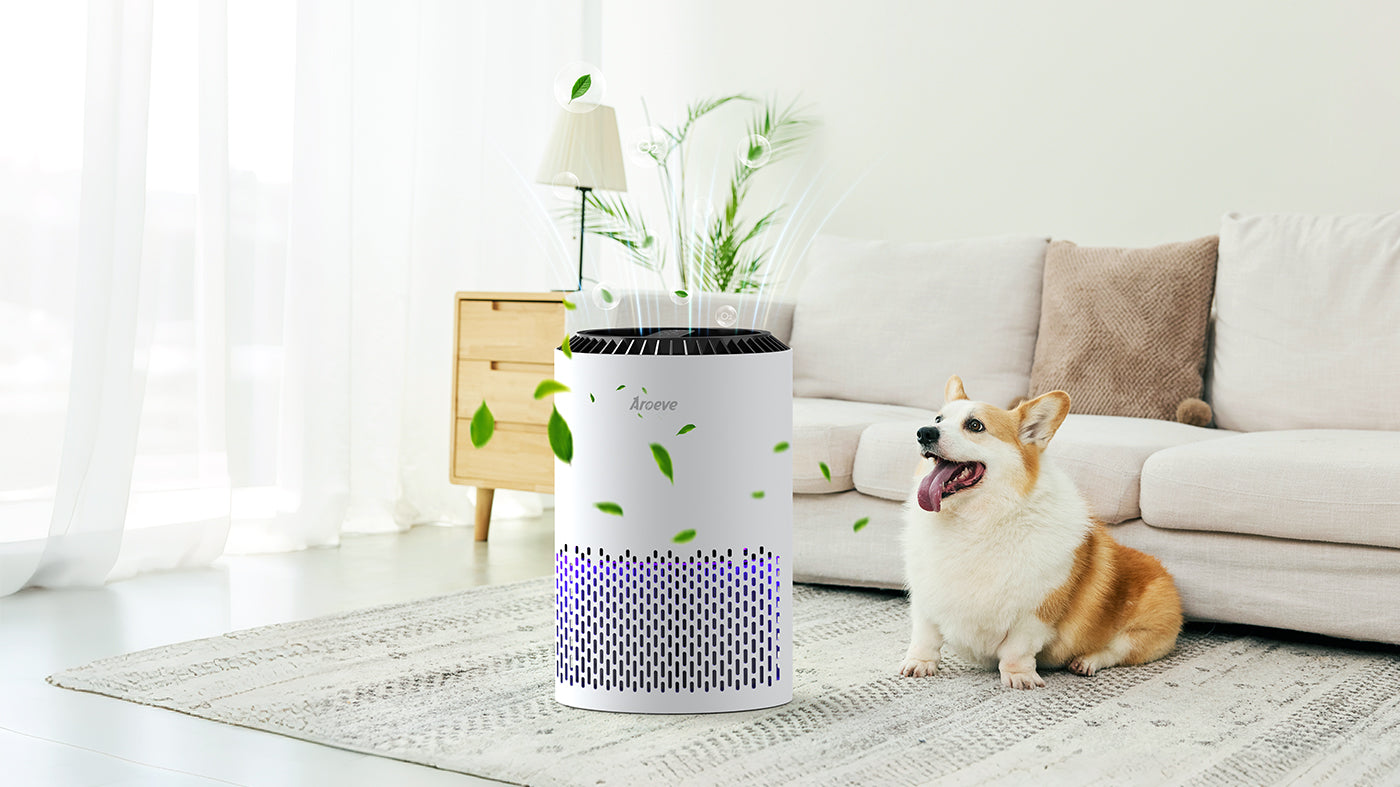
For smaller spaces, the AROEVE MK01A offers a compact design with multiple fan speeds and Sleep Mode. It's designed for rooms up to 287 sq. ft., making it a practical option for bedrooms, offices, and other personal spaces.
The MK01A uses a multi-stage filtration system designed to help capture common airborne particles such as dust, pollen, smoke, and pet dander.
Its different operating modes also give you more control over how you use the purifier throughout the day.
For example, you can use a higher fan speed when you want faster air circulation and switch to a quieter setting when you're working or sleeping.
If you need a purifier for a larger room, choosing a model designed for greater room coverage can provide more suitable airflow without relying on a small purifier to handle a space beyond its intended range.
Air Purifier Electricity Consumption: What Should You Expect?
So, does an air purifier use a lot of electricity?
For most people, the answer is no.
The actual electricity consumption depends on the purifier's wattage, fan speed, operating hours, and local electricity rate. A relatively low-power air purifier can be used for extended periods without consuming the same amount of electricity as high-power household appliances.
If you're trying to estimate your own air purifier running cost, start by checking the wattage listed for your model.
Then use this simple calculation:
Wattage ÷ 1,000 × hours used × electricity rate = estimated electricity cost
For example, a 50-watt air purifier running 8 hours per day uses approximately 12 kWh per month.
If it runs 24 hours a day, it uses approximately 36 kWh per month.
From there, simply multiply the number by your local electricity rate.
This gives you a much more useful estimate than simply asking whether an air purifier is "energy efficient."
The Bottom Line
An air purifier generally doesn't use a lot of electricity compared with many other household appliances.
The biggest factors are how powerful the purifier is, how fast the fan is running, how long you use it, and whether the model is appropriate for your room.
If you want to keep your air purifier electricity consumption under control:
- Choose a purifier designed for your room size.
- Use higher fan speeds when you actually need them.
- Use Sleep Mode or a lower speed at night.
- Replace the filter according to the recommended schedule.
- Use a timer if continuous operation isn't necessary.
- Check the purifier's wattage before buying.
Most importantly, don't focus only on the number of watts.
A good air purifier should provide the airflow and filtration your space needs while fitting comfortably into your everyday routine.
Whether you're looking for an air purifier for home, an air purifier for bedroom, or a HEPA air purifier for everyday use, understanding electricity consumption can help you make a more informed choice.
Frequently Asked Questions
Does an air purifier use a lot of electricity?
Generally, no. Most household air purifiers use relatively little electricity compared with appliances such as air conditioners and space heaters. Actual consumption depends on the model and fan speed.
Can I leave my air purifier on 24/7?
Yes. Many people choose to run their air purifier continuously. Using a lower fan speed or Sleep Mode when appropriate can help reduce energy use and operating noise.
How many watts does an air purifier use?
The exact amount varies by model. Many household air purifiers operate within the range of a few dozen watts to around 100 watts, although some models may use more or less.
Is it cheaper to run an air purifier on low?
Generally, yes. Lower fan speeds typically require less electricity than higher speeds. However, the right setting depends on your room and air-cleaning needs.
How much does it cost to run an air purifier 24/7?
It depends on the purifier's wattage and your electricity rate. For example, a 50-watt purifier running continuously uses approximately 36 kWh per month. Multiply that number by your local electricity rate to estimate the cost.
Does an air purifier increase your electric bill?
Yes, any electrical appliance that runs continuously will add something to your electricity consumption. However, an air purifier typically uses much less power than high-energy appliances such as heaters and air conditioners.
What should I look for in an energy-efficient air purifier?
Look beyond wattage. Consider the purifier's room coverage, airflow, fan speed options, filtration system, Sleep Mode, timer, noise level, and filter replacement requirements. The right combination will help you get effective air purification without using more energy than necessary.

Laisser un commentaire
Ce site est protégé par hCaptcha, et la Politique de confidentialité et les Conditions de service de hCaptcha s’appliquent.